
Congratulations! You are live with your Cirrus Bridge. Now that you are operational, here are a few suggested best practices from the Cirrus Team.

Congratulations! You are live with your Cirrus Bridge. Now that you are operational, here are a few suggested best practices from the Cirrus Team.

In November 2023, InCommon introduced a new metadata health feature for the federation. This helps ensure accuracy of certain information provided in the metadata that can get stale over time like contacts, URLs (Privacy Statement, Logo, Error), and TLS endpoints. Below are some answers to common questions you may have about the metadata health feature.

Stakeholder communication is essential to ensure any implementation of new technology is successful. For customers implementing the Cirrus Bridge it is no different. In many cases, customers are retiring an existing Shibboleth service that has been running for decades and provided faculty, students, and staff access to hundreds of Service Providers. Working with many customers, Cirrus has identified that a good communication plan is essential at the beginning of each implementation.
Cirrus Identity is excited to share our External Login Solution video!
When integrated with Entra ID, Okta, or Duo SSO, the Cirrus Bridge supports application policy configuration in these upstream systems, allowing you to consolidate your security controls into your enterprise system of choice.
The Cirrus CAS Bridge supports relying parties (service providers and applications) requiring the CAS protocol. The following is guidance for customers who have implemented the Cirrus CAS Bridge and need to add additional CAS relying parties.
How To Set Up Attributes in the Cirrus Bridge Enterprise Application When Different Service Providers Have Different Attribute Requirements
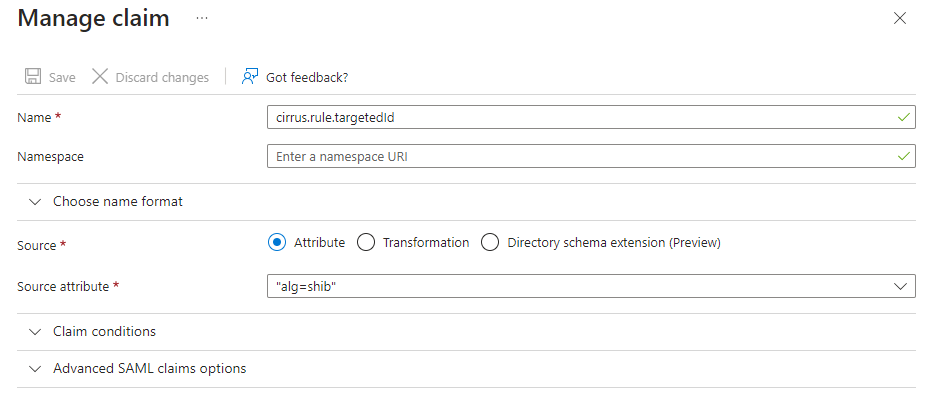
Customers often have questions about the attribute eduPersonTargetedID (ePTID), which is sometimes used in SAML SSO assertions. Here are answers to common questions.